Published by Nature4Climate and Arboretica, this fifth edition uses AI-assisted analysis to assess more than 1,500 NbS-related policies across 190 countries that help shape enabling conditions for high-integrity nature-based credits. It reviews legal frameworks, financing, safeguards, MRV systems, adaptation integration and IPLC recognition, identifying gaps that affect credit quality, risk, permanence and project legitimacy. The report underscores the need for stronger national policy environments to support credible, durable NbS project development across both VCM and Article 6 pathways.

Foundation funding for climate change adaptation and resilience 2025
ClimateWorks Foundation report analyses philanthropic funding for climate adaptation and resilience across 40 foundations, showing a 120% increase since 2021. It highlights sector and regional trends, funding gaps and the importance of locally led adaptation and collaborative learning.
Global Forest Resources Assessment 2025
FAO’s 2025 Global Forest Resources Assessment shows forests still cover 4.14 billion ha, 32% of Earth’s land, but nearly 11 million ha are lost each year. The rate of deforestation is slowing, while restoration and protected areas expand, offering mixed progress toward global forest and climate goals.
High-risk forests, high-value returns: A co-benefits assessment for decision-makers (Full report)
Published by UNEP, this analysis maps tropical “high-risk forests” where protection yields the greatest combined returns for people and climate, quantifying services for water, food, hazard mitigation and livelihoods to guide where finance and policy should prioritise action.
Forest Declaration Assessment 2025
Published by the Forest Declaration Assessment coalition, the 2025 edition tracks progress toward 2030 forest goals with a focus on finance and market signals, integrity developments, uptake of forest credits across VCM and compliance channels, and policy pathways (including Article 6) shaping investment into priority forest landscapes.
Room to Grow: The Economic Case for Forest Restoration in Brazil
Published by Orbitas, this report builds the economic case for large-scale forest restoration in Brazil, showing it could generate USD 141 billion and 350,000 jobs annually through smart policy, finance innovation, and integration of carbon, biodiversity and bioeconomy markets.
Towards Nature Positive for the Ocean: Pathways for Corporate Contributions
Published by WWF, this report provides a science-based framework for corporate action to halt and reverse marine biodiversity loss. It adapts the SBTN AR3T model to the ocean context and details priority actions for four industries: offshore wind, shipping, coastal tourism and seafood. Each pathway combines avoidance, restoration and transformative partnerships with finance and policy levers to achieve nature-positive outcomes by 2030.
Global study on Indigenous Peoples’ climate contributions (executive summary)
Led by ELATIA with support from the Mohamed bin Zayed Fund, this study offers the most comprehensive mapping yet of Indigenous Peoples’ climate leadership. It distills insights from more than 700 initiatives, highlighting self-determined solutions, nature-based innovation, and climate justice in action. It calls for a radical shift in climate finance and governance, redirecting flows, reframing impact metrics, and ensuring Indigenous Peoples are not just stakeholders, but powerholders in climate decision-making.
From the ground up: Lessons from African communities on climate risk and building resilience with nature
Fauna & Flora’s report elevates grassroots perspectives from three African regions confronting climate impacts. It documents community-driven nature-based solutions in savannahs and coastal zones, offering insight into how local leadership and ecosystem stewardship deliver tangible resilience. The report calls for policy frameworks and adaptation finance flows that embed equity, empower Indigenous knowledge, and address region-specific vulnerabilities.
Standard and methodology for the development and certification of mangrove blue carbon projects in Indonesia
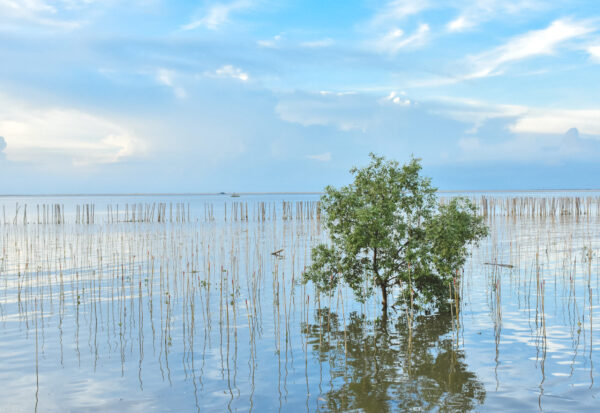
CIFOR-ICRAF’s new standard provides a technical blueprint for designing, implementing, and certifying mangrove blue carbon projects in Indonesia. It offers rigorous guidance on baseline setting, additionality, leakage, MRV, and legal frameworks, helping scale high-integrity coastal carbon initiatives.