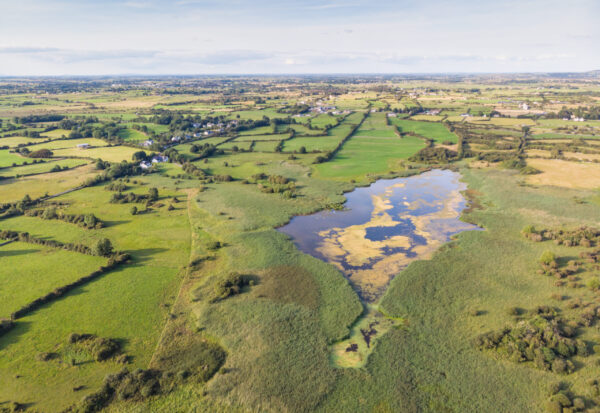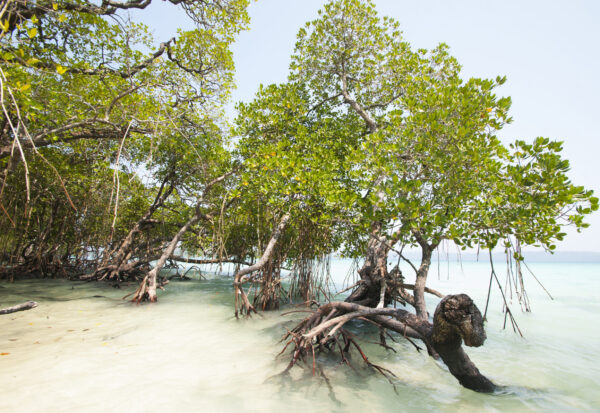
Earth Security reports that despite their ecological and climate value, blue carbon projects remain underfunded due to undervalued credits. This report offers a premium pricing strategy, anchored in co-benefit certification, equitable benefit-sharing, and market positioning, to elevate blue carbon as a high-impact climate asset. It explores buyer trends, price benchmarks, and certification systems, calling for developers, buyers, and standard-setters to collectively reshape market expectations around value and integrity.
The great climate solution: The amazon rainforest and carbon market
A report by Earth Innovation Institute states that the Amazon Forest Climate Solution (AFCS) offers a near-term pathway to global climate impact, potentially achieving 1.5 GtCO₂e in reductions by 2030, double the EU target. Brazil’s jurisdictional REDD+ (JREDD+) programs are central to this, generating credits tied to state-wide performance, not isolated projects. The report highlights regulatory clarity, Article 6 integration, and partnerships (e.g. with China) as critical to scaling. JREDD+ could yield $10–20B in revenue and support inclusive forest economies.
State and trends of carbon pricing 2025
The World Bank reports that carbon pricing instruments now cover 28% of global emissions and raised over $104B in 2024, an all-time high. The report explores emerging trends in carbon market linkages, Article 6 readiness, use of revenues, and climate equity. It also reviews new systems launched in India, Vietnam, and Brazil, alongside revisions in the EU and China. The voluntary market is examined for its integration potential and integrity risks. A section on international cooperation outlines how pricing can support the just transition and sustainable development across jurisdictions.
The social and economic impacts of carbon markets on communities in low and middle income countries
This FSD Africa report explores the role of carbon markets in driving climate finance across the continent. It highlights current flows, opportunities, and risks, calling for equitable market design, local benefit-sharing, and more enabling policy environments to ensure African countries secure greater value and agency in carbon markets.
Evolving markets, emerging solutions: Carbon Market Report 2025
The Carbon Market Institute’s annual report tracks Australia’s evolving carbon market, policy reforms, and investor sentiment. It unpacks shifts in credit pricing, demand, and project type, and explores how equity, integrity, and First Nations engagement are shaping a more sustainable market architecture.
Forecasting the voluntary carbon market (March 2025)
AlliedOffsets introduces a forecasting model for the VCM, simulating credit demand under various market conditions through 2030. Scenarios reflect divergent buyer behavior, regulatory signals, and investor sentiment. The baseline scenario projects steady growth in retirements, while an optimistic scenario sees near 1 GtCO₂e retired annually by 2030. It identifies market levers (e.g. Scope 3 frameworks, policy alignment, pricing clarity) that could influence uptake. The model helps guide strategy for developers, buyers, and intermediaries navigating future carbon market dynamics.
Nature Finance Focus: Tracking Global Trends in Nature Investment
This June 2025 report by Pollination highlights the growing importance of nature in investment strategies, with a focus on how institutional investors can engage with the voluntary carbon market. It offers practical tools to assess nature-related risks, dependencies, and opportunities across portfolios.
2025 CDR Market Survey: In Net Zero Standards We Trust
This 2025 report by CDR.fyi and Sylvera surveys both durable carbon dioxide removal suppliers and purchasers, revealing a significant price gap, reliance on net-zero standards to drive demand, and strong intent to scale durable CDR. However, growth remains limited by cost, quality uncertainty, and early-stage market constraints.
Evolving Markets, Emerging Solutions
This April 2025 report by the Carbon Market Institute and Westpac, examines how Australia’s carbon markets are maturing, exploring supply and demand trends, policy reforms, Indigenous leadership, technology innovation, and international opportunities for advancing decarbonisation.
Country Guidance for Navigating Carbon Markets
This June 2025 report by VCMI (in partnership with the World Bank, GIZ, UNDP, UNFCCC and others) provides country-focused guidance to develop high-integrity carbon market strategies: from authorising credits, to pricing and governance frameworks, to help governments confidently engage with international carbon finance.