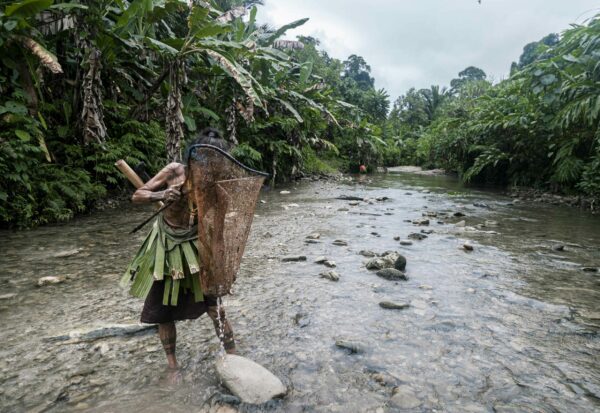
Carbon Tanzania’s 2023 impact report can be read as an example of high-integrity in the voluntary carbon market. Published in May 2024, it is useful for project developers interested in improving community engagement and learning from best practices in carbon revenue sharing. It is also useful for corporates looking for examples of high-quality nature-based climate solutions.
Natural Climate Solution Carbon Credits: The role of project developers and communities
This report from NCS Alliance and WBCSD addresses the role of project developers and communities in natural climate solution carbon credits. Published in May 2024, It includes a blueprint for developing NCS projects covering initiation, feasibility, design and implementation. Section 3 considers how NCS works in practice with a discussion of additionality, FPIC and methodologies.
Comparative Study Of Carbon Rights In The Context Of Jurisdictional REDD+
This report was produced by FAO, UNDP, UNEP and UN-REDD+ in March 2024. It contains a series of case studies from Africa, Asia, the Pacific, Latin America and the Caribbean to help REDD+ projects learn about land rights and tenure. REDD+ programmes should not solely link benefits to ownership because sometimes land rights are not formalised. In these instances, it should be linked to participation in programme activities.
Voluntary Carbon Market Developer Overview | 2023
Abatable’s report contains informative visuals to communicate the landscape for project developers in 2023. Published in February 2024, it predicts that the market will move at two speeds during 2024 with project developers at different stages with respect to Corsia and Article 6. It also expects project developers will start to diversify their pipelines and start to collaborate for corresponding adjustments.
Recommendations for the Digital Voluntary and Regulated Carbon Markets
Set in a context of market criticism, the paper from The World Economic Forum addresses the challenges (lack of transparency, equity and quality) facing current carbon markets. Published in March 2023, it focuses on the potential of digital technology to help build the next generation of carbon markets that are free from these issues and can better deliver climate mitigation, biodiversity preservation and positive social impacts.
Embedding Indigenous Knowledge in the Conservation and Restoration of Landscapes
“Respecting Indigenous peoples’ cultural knowledge, rights and responsibilities will boost the resilience and long-term impact of landscape conservation and restoration projects,” the report writes. Published by The World Economic Forum in January 2023, this is essential reading for project developers as they plan and establish carbon projects. It is not appropriate to work on or near Indigenous land without seeking the free, prior, informed consent of the people to whom it belongs. The report shares ALIVE – a framework for action.
The State of the Carbon Developer Ecosystem 2022
In this report, Abatable considers the state of carbon projects in 2022. Published in January 2023, this is relevant to both the supply and demand sides of the market. It says that more than $10bn of investment was announced for carbon credit generation in 2022, while the total size of retirements was just over $1bn.
Global Standard for NbS
This is the first-ever Global Standard for Nature-based Solutions. Published by the IUCN in July 2020, it is extremely relevant for the supply side of the voluntary carbon market. It helps guide the design, implementation and verification of nature-based projects. Using eight assessment criteria, the Global Standard invites users to complete a self-assessment.