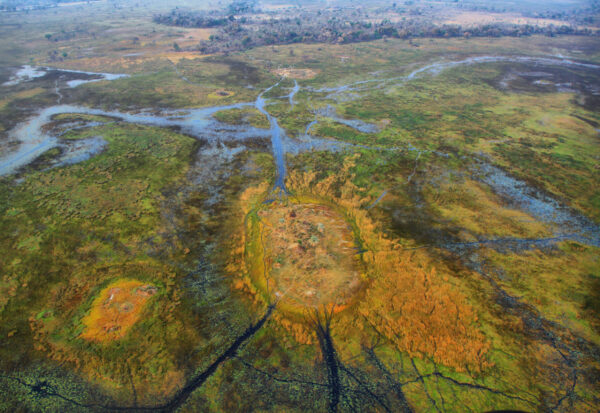
A report by Earth Innovation Institute states that the Amazon Forest Climate Solution (AFCS) offers a near-term pathway to global climate impact, potentially achieving 1.5 GtCO₂e in reductions by 2030, double the EU target. Brazil’s jurisdictional REDD+ (JREDD+) programs are central to this, generating credits tied to state-wide performance, not isolated projects. The report highlights regulatory clarity, Article 6 integration, and partnerships (e.g. with China) as critical to scaling. JREDD+ could yield $10–20B in revenue and support inclusive forest economies.

State and trends of carbon pricing 2025
The World Bank reports that carbon pricing instruments now cover 28% of global emissions and raised over $104B in 2024, an all-time high. The report explores emerging trends in carbon market linkages, Article 6 readiness, use of revenues, and climate equity. It also reviews new systems launched in India, Vietnam, and Brazil, alongside revisions in the EU and China. The voluntary market is examined for its integration potential and integrity risks. A section on international cooperation outlines how pricing can support the just transition and sustainable development across jurisdictions.
Evolving markets, emerging solutions: Carbon Market Report 2025
The Carbon Market Institute’s annual report tracks Australia’s evolving carbon market, policy reforms, and investor sentiment. It unpacks shifts in credit pricing, demand, and project type, and explores how equity, integrity, and First Nations engagement are shaping a more sustainable market architecture.
Evolving Markets, Emerging Solutions
This April 2025 report by the Carbon Market Institute and Westpac, examines how Australia’s carbon markets are maturing, exploring supply and demand trends, policy reforms, Indigenous leadership, technology innovation, and international opportunities for advancing decarbonisation.
Country Guidance for Navigating Carbon Markets
This June 2025 report by VCMI (in partnership with the World Bank, GIZ, UNDP, UNFCCC and others) provides country-focused guidance to develop high-integrity carbon market strategies: from authorising credits, to pricing and governance frameworks, to help governments confidently engage with international carbon finance.
Consolidated List of Indicators for Assessing Overall Progress Towards Achievement of the Targets Referred to in Paragraphs 9-10 of Decision 2/CMA.5, and Progress of the Work on the Indicators
In this May 2025 report by the United Nations Framework Convention on Climate Change, experts outline 490 indicators to track global progress on climate adaptation—covering water, food, health, ecosystems, and more—marking a key step toward consistent, measurable global adaptation goals.
SF6: The Hidden Giant of Super Pollutants:
Published in April 2025, the AlliedOffsets and Planet 2050 SF₆ Report highlights the extent of sulfur hexafluoride’s climate impact and its overlooked role in carbon markets. It calls for greater focus on SF₆ reduction through new technologies, policies, and inclusion in global climate strategies.
Defining Impact and CDR: The Impact Framework
Released in April 2025, Opna’s Impact Framework helps assess carbon removal (CDR) projects beyond carbon capture. It evaluates five key areas: carbon, innovation, social, economic and environmental impacts. The framework supports the building of custom climate strategies, ensuring measurable outcomes, and de-risking carbon removal investments.
SF6: The Hidden Giant of Super Pollutants:
Published in April 2025, the AlliedOffsets and Planet 2050 SF₆ Report highlights the extent of sulfur hexafluoride’s climate impact and its overlooked role in carbon markets. It calls for greater focus on SF₆ reduction through new technologies, policies, and inclusion in global climate strategies.
Defining Impact and CDR: The Impact Framework
Released in April 2025, Opna’s Impact Framework helps assess carbon removal (CDR) projects beyond carbon capture. It evaluates five key areas: carbon, innovation, social, economic and environmental impacts. The framework supports the building of custom climate strategies, ensuring measurable outcomes, and de-risking carbon removal investments.