A report by Earth Innovation Institute states that the Amazon Forest Climate Solution (AFCS) offers a near-term pathway to global climate impact, potentially achieving 1.5 GtCO₂e in reductions by 2030, double the EU target. Brazil’s jurisdictional REDD+ (JREDD+) programs are central to this, generating credits tied to state-wide performance, not isolated projects. The report highlights regulatory clarity, Article 6 integration, and partnerships (e.g. with China) as critical to scaling. JREDD+ could yield $10–20B in revenue and support inclusive forest economies.
Nature Finance Focus: Tracking Global Trends in Nature Investment
This June 2025 report by Pollination highlights the growing importance of nature in investment strategies, with a focus on how institutional investors can engage with the voluntary carbon market. It offers practical tools to assess nature-related risks, dependencies, and opportunities across portfolios.
Evolving Markets, Emerging Solutions
This April 2025 report by the Carbon Market Institute and Westpac, examines how Australia’s carbon markets are maturing, exploring supply and demand trends, policy reforms, Indigenous leadership, technology innovation, and international opportunities for advancing decarbonisation.
Global Carbon Markets Could Protect 150 million Hectares of Land in the Next Decade
This June 2024 report by BeZero Carbon reveals that a well‑structured $100 billion global carbon market over the next decade could protect up to 150 million hectares of land (the size of Peru) and support around 17 million jobs, highlighting the immense nature and livelihood benefits of scaling high-integrity carbon markets.
State of the Blue Carbon Market: An Ocean of Potential 2024
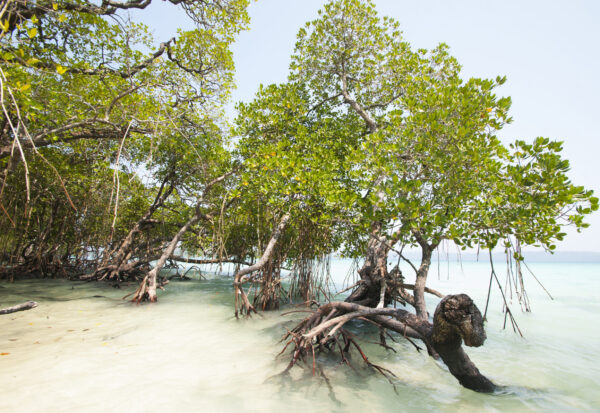
The State of the Blue Carbon Market report highlights the potential of coastal ecosystems (mangroves, seagrasses, salt marshes) in climate mitigation. Published by Ecosystem Marketplace in October 2024, it says that despite challenges like high costs and regulatory hurdles, the market for blue carbon credits is growing. Scaling up through better financing and policy support is key to unlocking their potential.
Balancing Bankability and Integrity: fostering investment-ready nature-based solutions
The World Wildlife Fund released a report in March 2025 based on research from Wild Business. It finds that the world must nearly triple its annual spending on nature-based solutions from US$200 billion to US$542 billion by 2030 to mitigate the climate crisis and biodiversity loss. It includes real-life examples of nature-based solutions in action to show how these projects can transform landscapes and create profits.
State of the Blue Carbon Market: An Ocean of Potential 2024
The State of the Blue Carbon Market report highlights the potential of coastal ecosystems (mangroves, seagrasses, salt marshes) in climate mitigation. Published by Ecosystem Marketplace in October 2024, it says that despite challenges like high costs and regulatory hurdles, the market for blue carbon credits is growing. Scaling up through better financing and policy support is key to unlocking their potential.
VC Funding Trends in Nature Tech 2025
Serena Capital and Nature4Climate partnered to produce the VC Funding Trends in Nature Tech report in April 2025. It highlights how nature tech startups experienced a 16 percent rise in venture capital investments compared to 2023, with the total investment reaching $2.1 billion in 2024. Early-stage funding is growing, with the U.S. and Europe leading investment trends in nature tech. Key sectors include food and agriculture, biodiversity credits, and water management.
Balancing Bankability and Integrity: fostering investment-ready nature-based solutions
The World Wildlife Fund released a report in March 2025 based on research from Wild Business. It finds that the world must nearly triple its annual spending on nature-based solutions from US$200 billion to US$542 billion by 2030 to mitigate the climate crisis and biodiversity loss. It includes real-life examples of nature-based solutions in action to show how these projects can transform landscapes and create profits.
Growing Resilience: Unlocking the Potential of Nature-Based Solutions for Climate Resilience in Sub-Saharan Africa
This report, published by the World Resources Institute in February 2025, considers the potential of nature-based solutions to deliver for Sub-Saharan Africa. It considers different funding strategies to scale up investments in nature-based solutions, including voluntary carbon markets, debt-for-nature swaps and risk-sharing instruments.